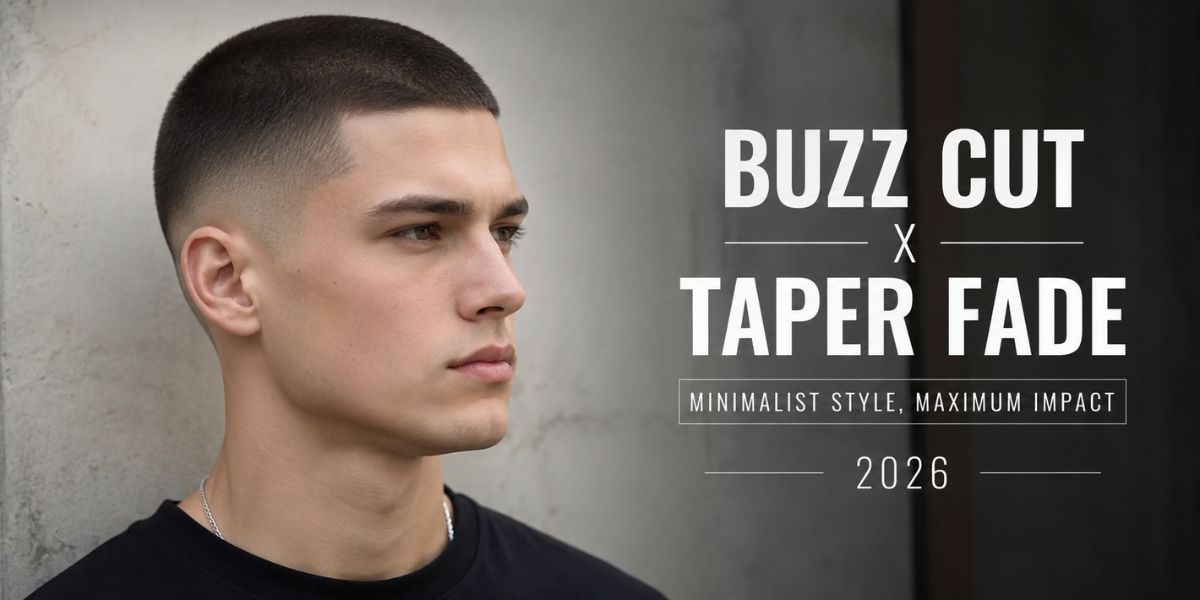
Buzz Cut x Taper Fade – Minimalist Style, Maximum Impact 2026
Short hair is having a permanent moment, and no combination proves it better than the buzz cut x taper fade. It’s clean, it’s low-effort, and it somehow manages to look sharper every year instead of going stale. If you’re tired of long styling routines, product buildup, and haircuts that fall apart by day three, this guide walks you through everything — from what the cut actually is, to how to pick the right version for your face shape, to keeping it razor-sharp between barber visits.
What Is a Buzz Cut x Taper Fade?
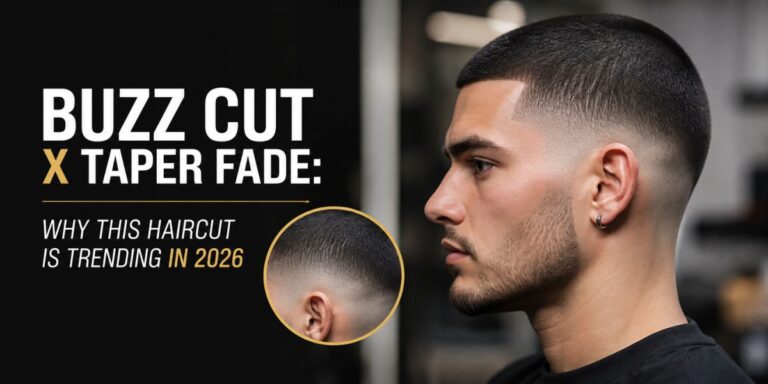
At its core, a buzz cut x taper fade is two grooming techniques working as one. The buzz cut handles the top, cutting it down to a short, even length with a single clipper guard. The taper fade handles everything else, gradually shortening the hair around the sides, back, and neckline until it blends into the skin or near-skin length. The result is a haircut that looks intentional from every angle, with no harsh lines or awkward growth patterns.
Understanding the Buzz Cut – Precision in Minimalism
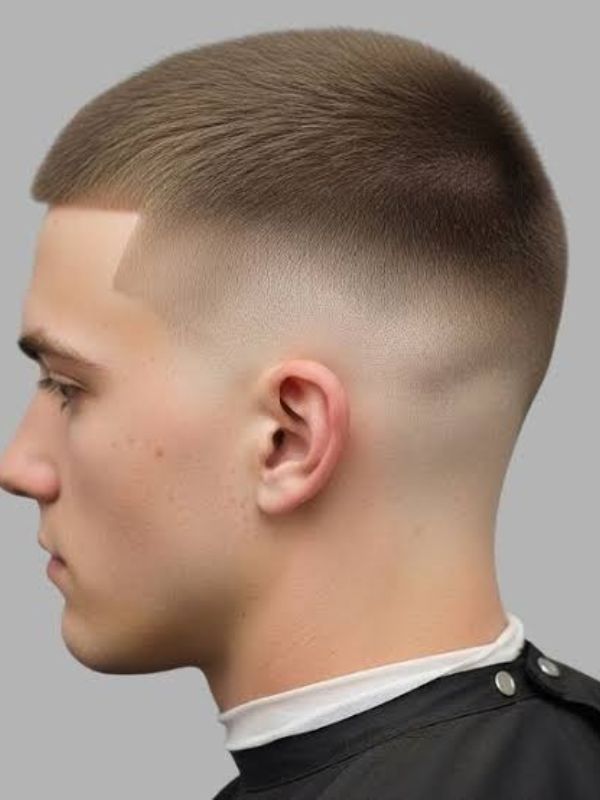
A true buzz cut is about consistency. The barber runs a single guard — usually somewhere between a #1 and a #4 — evenly across the top and crown, leaving a uniform layer of hair. There’s no parting, no layering, and almost nothing to style. This is exactly why it has stayed popular for decades: it strips grooming down to the essentials while still looking deliberate.
The Taper Fade – A Gradual Touch of Clean Sophistication
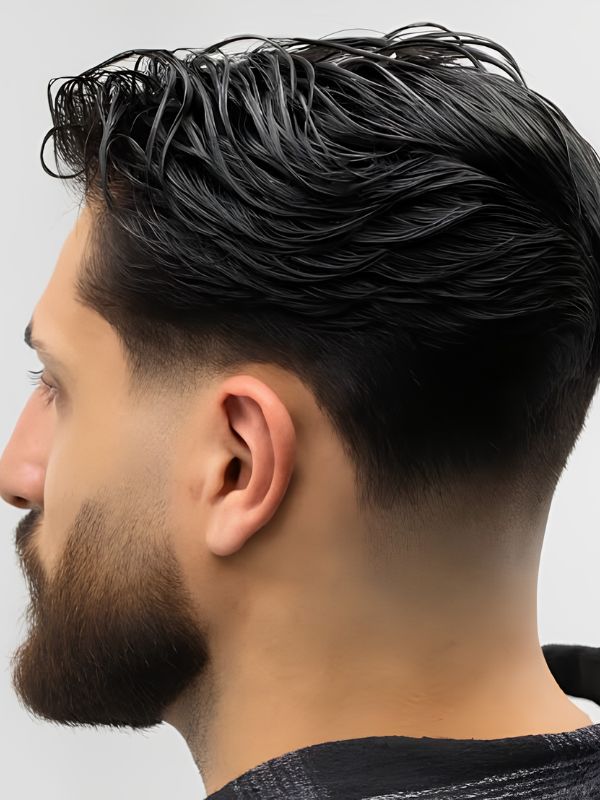
Where the buzz cut is about uniform length, the taper fade is about controlled change. Starting from a guard length near the top, the barber works down through progressively shorter guards until the hair disappears into the skin at the hairline. Done well, there’s no visible line between guard changes — just a smooth gradient from hair to skin. Some sources distinguish a “taper” as ending in a short guard near the hairline, while a “fade” pushes that graduation all the way to bare skin; in everyday barbershop language, the two terms are now used almost interchangeably.
How the Buzz Cut and Taper Fade Combine Seamlessly
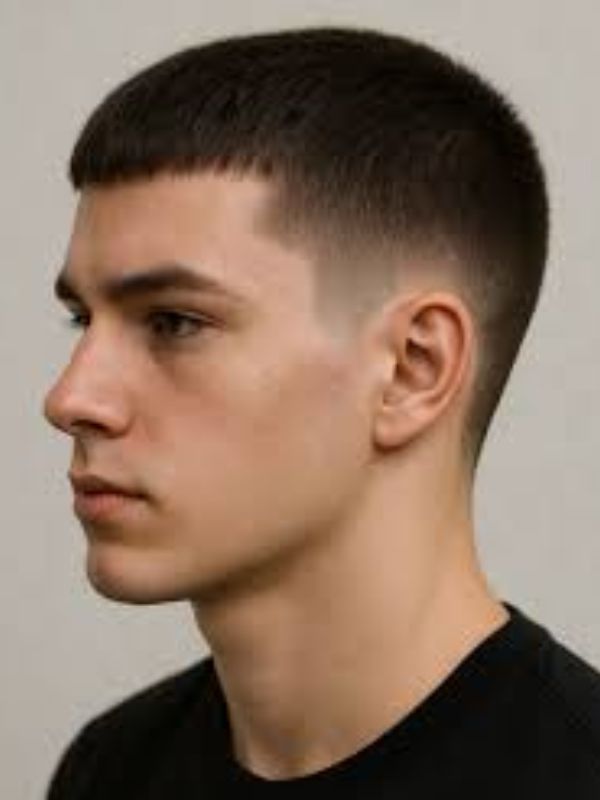
When paired, the buzzed top acts as the anchor length and the taper fade builds the transition down to the neckline and temples. The barber typically works from the bottom guide line upward, using half-open taper levers to blend each guard change into the next. The final look reads as one continuous haircut rather than two separate techniques stitched together.
Why the Buzz Cut x Taper Fade Has Become a Modern Classic
Low Maintenance, High Style Appeal
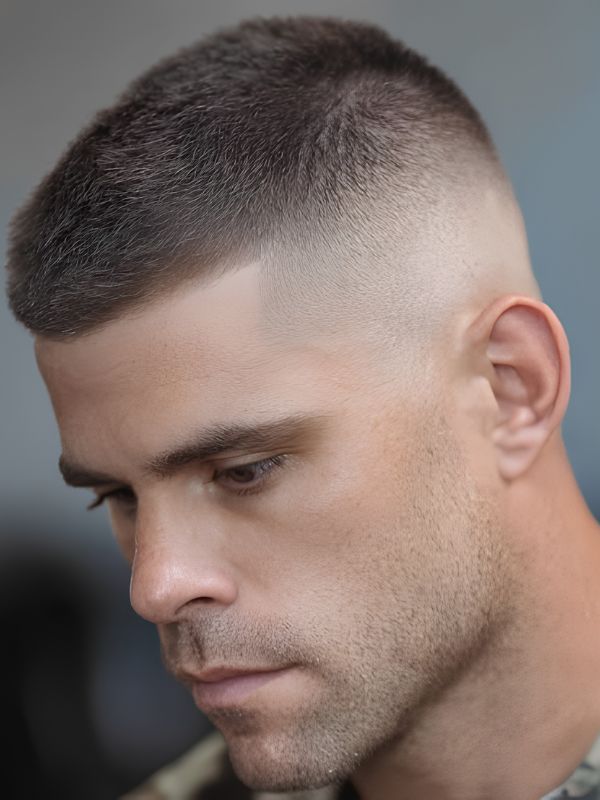
There’s no blow-drying, no product layering, and no morning routine required. A quick towel-dry or a light run of the palm is usually enough to keep it looking finished. This has made it a favorite among people who want to look put-together without spending time on it every day.
A Timeless Choice for All Hair Types and Face Shapes
Straight, wavy, curly, or coily — the buzz cut x taper fade adapts to nearly every hair texture by adjusting the top guard length. Curlier hair often looks fuller at a #3 or #4, while straighter hair can go shorter without losing shape. Face shape flexibility comes from adjusting where the fade starts, which we’ll cover below.
Versatility From Professional to Casual Looks
A low taper reads conservative and boardroom-appropriate. A high taper leans bold and streetwear-adjacent. Because the core buzzed top stays the same, switching between these looks is really just a conversation about fade height with your barber — not a completely new haircut.
Different Types of Buzz Cut x Taper Fade Styles
The buzz cut x taper fade isn’t one fixed look — it’s a framework that flexes based on fade height, texture, and detailing. Here’s a breakdown of the most searched and requested variations.
| Style Variation | Best For | Key Feature |
| Textured haircuts men | Thicker or curlier hair | Slightly longer top guard to show natural texture |
| Low taper fade | Professional settings | Subtle blend starting near the ears |
| Mid taper short fringe | Everyday versatility | Balanced contrast with a short forward fringe |
| French quiff haircut | Styled, dressier occasions | Buzzed sides with volume left at the front |
| Low taper buzz cut | Understated elegance | Smooth, barely-there contrast |
| Mid taper buzz cut | Most face shapes | Fade starts around the temple |
| High taper buzz cut | Bold, statement looks | Fade pushes up near the crown |
| Temple/neck taper | Clean detailing | Sharp finishing at hairline edges |
The Low Taper Buzz Cut – Subtle and Smooth
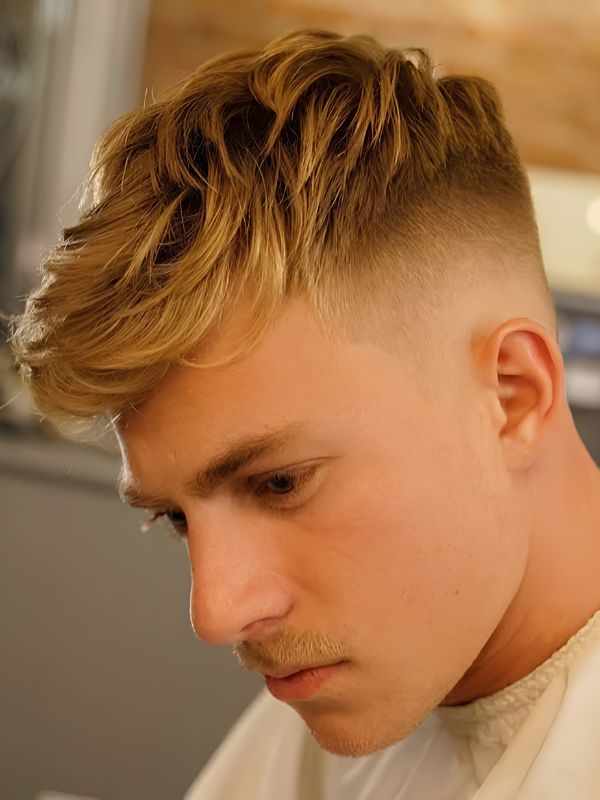
The fade begins just above the ears and stays close to the natural hairline, leaving most of the side length intact. This is the most office-friendly version because the contrast between top and sides is gentle rather than dramatic.
The Mid Taper Buzz Cut – Balanced and Bold
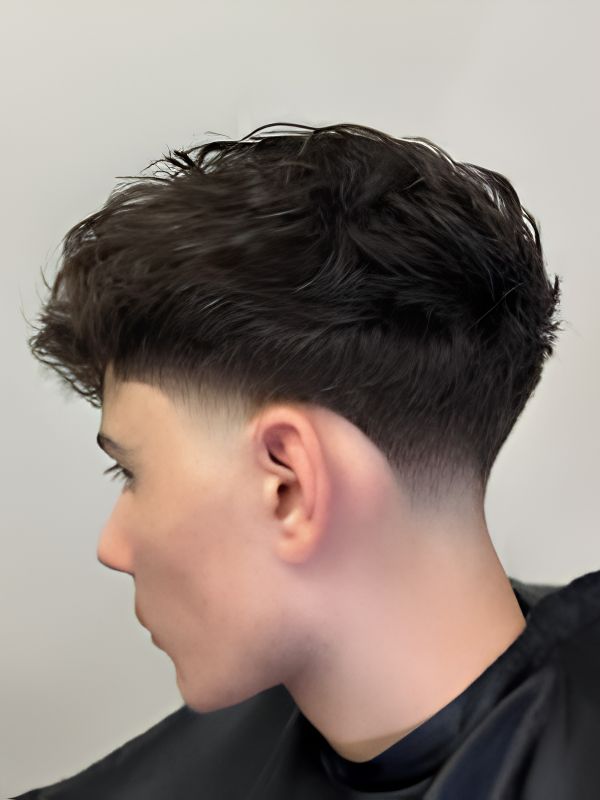
Starting roughly at the temple, the mid taper creates noticeably more contrast without tipping into “extreme” territory. Barbers often recommend this as the safest all-around choice because it suits nearly every face shape.
The High Taper Buzz Cut – Sharp and Statement-Making
Here the fade climbs up near the crown, drawing maximum attention to the buzzed top. It’s the boldest version of the cut and tends to suit oval and square faces that can carry a strong, defined line.
The Temple Taper and Neck Taper – Clean Finishing Details
Beyond the main fade, barbers also taper the temples and nape separately to avoid any stray growth or blocky edges. This finishing work is what separates a genuinely sharp cut from one that just “looks buzzed.”
Also Read This: 27 Stylish Low Taper Fade with Trending Textured Crop Haircuts in 2026
Choosing the Right Buzz Cut x Taper Fade for You
Matching Your Fade Style to Your Face Shape
- Round faces: A higher taper with slightly more length on top adds vertical emphasis and balances width.
- Long faces: A low taper with a fuller top guard helps shorten the visual length of the face.
- Square faces: High tapers and skin fades complement strong jawlines well.
- Oval faces: Almost any taper height works, making this the most flexible face shape for the cut.
Buzz Length Options From Induction to Crew-Length
- Induction (0 guard): The shortest possible buzz, essentially skin-close all over.
- #1–#2 guard: A classic short buzz with slight texture visibility.
- #3–#4 guard: A longer buzz that shows more natural texture and curl pattern.
- Crew-length (#5–#6): Longer on top, closer to a crew cut, but still paired with a tapered side.
Skin Tone and Hair Texture Considerations
Fine or straight hair tends to look cleanest with a lower guard, since there’s less volume to manage. Coarser or curlier hair often benefits from a slightly longer top guard to avoid an overly flat appearance. Skin fades create the highest contrast and show up more visibly on lighter skin tones, while lower tapers offer a softer transition for those who prefer subtlety.
Personality and Lifestyle Fit
Active lifestyles and warmer climates tend to favor shorter buzz lengths and higher tapers, since they stay cooler and require fewer touch-ups. More conservative or corporate environments generally lean toward low tapers with longer top guards for a polished, understated finish.
How to Get the Perfect Buzz Cut x Taper Fade?
Communicating Clearly with Your Barber
Vague requests lead to inconsistent results. Instead of just saying “buzz cut with a fade,” specify:
- The guard number for the top (e.g., “a 3 on top”)
- Where you want the fade to start (low, mid, or high)
- Whether you want a skin finish or a shorter guard at the bottom
- Any additional detailing, like a line-up or beard blend
Tools and Techniques Used in Professional Fades
Barbers rely on a sequence of clipper guards — often #0, #0.5, #1, and #1.5 — worked upward from the nape and temples, using a half-open taper lever to blend between guard sizes. This eliminates the visible “steps” that separate an amateur fade from a professional one.
DIY Buzz Cut and Taper Fade Tips at Home
- Start with a longer guard than you think you need; you can always go shorter.
- Work against the direction of hair growth for the most even cut.
- Use a mirror setup that lets you see the back and sides clearly.
- Blend gradually — don’t jump straight from a #3 to skin without intermediate guards.
- Touch up only the perimeter (neckline, sideburns) between full cuts.
Styling and Maintaining a Buzz Cut x Taper Fade
Daily Grooming Habits to Keep the Fade Fresh
A quick rinse and light towel-dry is usually all that’s needed. Running a small amount of matte styling cream through the top can add texture without looking greasy.
Moisturizing and Scalp Care Essentials
Because so much scalp is exposed, moisturizing matters more with this cut than with longer hairstyles. A lightweight, non-greasy scalp oil or lotion helps prevent dryness, flaking, and irritation, especially after fresh fades.
Recommended Hair Products for Buzz Cut Styles
| Product Type | Purpose |
| Matte clay or paste | Adds texture without shine |
| Scalp moisturizer | Prevents dryness on exposed skin |
| Light SPF spray | Protects scalp from sun exposure |
| Beard oil (if paired) | Keeps beard blend smooth |
How Often to Visit the Barber for Maintenance?
Most barbers recommend a touch-up every two to three weeks. Higher tapers and skin fades tend to grow out faster and may need attention closer to the two-week mark, while lower tapers can often stretch to three or four weeks.
Buzz Cut x Taper Fade Variations for Added Personality
Line-Up, Hard Part, and Design Enhancements
A crisp line-up along the forehead sharpens the overall silhouette, while a hard part — a thin shaved line separating a section of hair — adds structure to an otherwise uniform buzz. Shaved-in designs on the sides are another popular way to personalize the fade.
Pairing with Beards and Mustaches
A well-blended beard fade connects the taper directly into facial hair, creating one continuous shape from temple to jawline. This pairing tends to suit thicker beards and more defined jawlines particularly well.
Adding Texture or Color for a Trendy Twist
Subtle color — from a natural-looking low-lift shade to a bolder fashion color — can add dimension to an otherwise minimalist cut. Texturizing sprays can also lift the top slightly for a less flat finish.
Buzz Cut x Taper Fade vs Other Popular Styles
| Style | Top Length | Side Treatment | Maintenance Level |
| Buzz Cut x Taper Fade | Very short, uniform | Gradual fade to skin/short guard | Low |
| Crew Cut Fade | Slightly longer, textured | Fade or taper on sides | Medium |
| High and Tight | Short on top | Very short sides, minimal blend | Low |
| Taper Fade Alone (longer top) | Longer, styled top | Same fade technique | Medium-High |
Comparing Buzz Cut x Fade with Crew Cut Fades
A crew cut keeps noticeably more length on top — often enough to style with a comb — while a buzz cut stays uniformly short across the entire top. Both can use the same fade technique on the sides, but the crew cut requires more daily styling effort.
How It Differs from the High and Tight Style
The high and tight, a military-rooted style, uses a very short, abrupt transition between the top and sides with minimal blending. The buzz cut x taper fade, by contrast, is defined by its smooth, gradual graduation — there’s no hard line at any point.
Buzz Cut vs Taper Fade Alone – Which Suits You Better?
A taper fade alone (paired with longer hair on top) suits people who still want some styling flexibility. A full buzz cut x taper fade combination suits people who want the lowest possible maintenance without sacrificing a sharp, deliberate look.
Expert Tips to Keep Your Look Sharp and Confident
Timing the Perfect Touch-Up Routine
Book your next appointment before the fade lines start blurring — usually right around the two-to-three-week mark. Waiting too long means the barber has to remove more length just to restore the sharp blend.
Avoiding Common Mistakes When Trimming or Fading
- Skipping guard sizes instead of blending gradually
- Cutting the neckline too high, which looks unnatural as hair grows back
- Using too much pressure with a home trimmer, creating uneven patches
- Ignoring the crown area, leaving a visible seam where the buzz meets the fade
Building Confidence Through a Clean, Polished Look
A sharp buzz cut x taper fade does a lot of the visual work for you. Clean lines and a fresh fade tend to read as put-together even without any additional styling effort — which is exactly the appeal of a minimalist cut with maximum impact.
Conclusion
The buzz cut x taper fade earns its “modern classic” status honestly — it’s fast to maintain, adapts to nearly every face shape and hair texture, and moves effortlessly between professional and casual settings. Whether you go low and subtle or high and bold, the core appeal stays the same: minimal effort, maximum sharpness. Bring a clear reference and specific guard numbers to your next barber visit, and you’ll walk out with a cut that looks intentional from every angle.

Anderson is a dedicated writer and content creator who enjoys sharing informative and engaging articles across a variety of topics. Through his writing, he aims to provide readers with valuable insights, fresh ideas, and easy-to-understand content every day.